

10 Under-the-Radar Cities in Latin America & the Caribbean

If you're looking for somewhere to move in Latin America or the Caribbean, the best options aren't always the most obvious.
There's no doubt about it — Americans are moving overseas in record numbers. According to a February 2026 Wall Street Journal article, one in five Americans now say they'd like to move abroad, up from one in ten in 2008. And if you've spent any time researching your options in Latin America or the Caribbean, you've probably seen the same destinations come up again and again: Medellín, Mérida, Cuenca, Panama City, Boquete. They're popular for a reason — these places offer real advantages, from established expat communities to relatively straightforward residency paths and strong overall quality of life.
But just because a destination works well for some doesn't mean it's the best fit for you. Following the crowd too closely can introduce its own trade-offs — rising housing costs driven by expat demand, longer residency processing times, and in some cases, a gradual loss of the very local character that made the place appealing in the first place.
Many of my clients approach me wanting to focus on Europe, but there are dozens of cities across Latin America and the Caribbean that offer stable, affordable, high-quality lifestyles that most Americans never seriously consider.
Here are 10 under-the-radar places worth a serious look — spanning Mexico, Brazil, Ecuador, Colombia, Panama, and four different Caribbean island nations. For each one, I'm listing the average monthly cost of living for two people, the best residency route, approximate fees, and typical time to approval.
1) Heroico Veracruz, Mexico
Best fit for: Retirees and Gulf Coast beach lovers who want an authentically Mexican port city with a vibrant cultural calendar, warm winters, and costs well below the popular expat hubs — and who are ready for a city where English is rarely spoken.
Heroico Veracruz — to give it its full official name, a designation earned through its repeated resistance to foreign invasions — is one of Mexico's oldest and most historically layered cities, and one of the least discussed in American relocation circles despite being a direct flight from Houston. It's a working Gulf Coast port of roughly 600,000 people: warm, loud, seafood-rich, and deeply proud of its Afro-Caribbean musical heritage. Son jarocho — the genre that gave the world "La Bamba" — was born here, and it still spills from cafés and cantinas around the zócalo (central town square) on weekend evenings. The city divides naturally between the colonial historic center, with its famous Malecón boardwalk and 16th-century harbor fortress, and the cleaner, more residential beachfront municipality of Boca del Río just to the south.

The honest caveat upfront: summers are hot and humid, and cold northerly Nortes winds sweep through in winter — so air conditioning bills run higher than in Mexico's highland cities. But for the right person who genuinely loves Gulf Coast warmth and wants an authentic Mexican city that hasn't been reshaped around foreign tastes, Veracruz is remarkable. Spanish is essential for daily life here, which is part of the point. Private hospitals in Boca del Río handle most medical needs, and the Veracruz airport offers direct connections to Houston and Mexico City.
Best long-term residency route: Temporary Resident Visa (Residente Temporal) at Mexican Consulate → Permanent after 4 years
Monthly cost of living: $1,200–$2,000
Residency income requirement: ~$4,100/month or ~$70,000 in savings (2026; varies by consulate)
Residency fees: ~$600–$700 (2026, after late-2025 fee increase)
Time to residency approval: 1–3 months
2) Puebla, Mexico
Best fit for: Retirees and families who want a large, sophisticated colonial city at altitude — with world-class food, direct US flights, and a fraction of the expat pressure of San Miguel de Allende or Mérida.

Puebla is Mexico's fourth-largest city and arguably its most architecturally stunning — a 16th-century colonial UNESCO World Heritage center of Baroque churches, hand-painted talavera tile facades, and broad cobblestone streets surrounding a magnificent zócalo, all sitting at 2,100 meters where the climate stays spring-like year-round. Unlike San Miguel or Mérida, Puebla doesn't attract significant foreign tourism or expat traffic. It's still a real Mexican city of over three million people, living entirely on its own terms. The food culture is genuinely world-class — Puebla is the birthplace of mole poblano, chalupas and chiles en nogada; its restaurant scene has quietly grown into one of the best in Mexico.
Practically speaking, Puebla delivers a level of infrastructure that far exceeds its expat radar placement: excellent private hospitals including Hospital Ángeles and UPAEP, a modern international airport with direct connections to multiple US cities, and one-bedroom apartments in good neighborhoods renting for $300–$600 a month. LiveAndInvestOverseas explicitly noted that Puebla "doesn't attract foreign tourists or expats like San Miguel de Allende" — which is exactly why it belongs on this list. Spanish is essential for daily life, but for anyone willing to invest in the language, Puebla offers colonial Mexico at its most authentic and its most affordable.
Best long-term residency route: Temporary Resident Visa (Residente Temporal) at Mexican Consulate → Permanent after 4 years
Monthly cost of living: $1,400–$2,200
Residency income requirement: ~$4,100/month or ~$70,000 in savings (2026; varies by consulate)
Residency fees: ~$600–$700 (2026)
Time to residency approval: 1–3 months
3) João Pessoa, Brazil
Best fit for: Retirees and beach-oriented remote workers who want warm weather, genuine Brazilian coastal life, and costs dramatically lower than the country's most-covered cities.
João Pessoa sits at the easternmost point of the Americas — where the sun rises first on the continent — and the quality of its light and beaches reflects that geography. The capital of Paraíba state, with about 900,000 residents, it earned UNESCO Creative City status and consistently ranks among Brazil's safest urban centers. The beachside neighborhoods of Tambaú and Cabo Branco are where most international residents settle: walkable, lined with seafront restaurants, reliably connected by fiber internet, and served by good private hospitals. Think of it as what Florianópolis was before the internet found it — a beautiful coastal Brazilian city with real local life and almost no English-language expat content.

Brazil's retirement visa requires proof of $2,000 per month in pension income — a realistic bar for most American retirees — and after four years, permanent residency follows.
One important note that belongs upfront: spending 183 or more days in Brazil triggers tax residency, meaning your worldwide income becomes subject to Brazilian tax. That's a significant planning consideration, and consulting a cross-border tax professional before committing is not optional here. For those who navigate it thoughtfully, however, João Pessoa is one of the most genuinely undiscovered coastal relocation options in the hemisphere.
Best long-term residency route: VITEM XIV Retirement Visa → Permanent Residency after 4 years
Monthly cost of living: $1,500–$2,200
Income requirement: $2,000/month in verifiable pension or retirement income
Residency fees: Consulate fees + ~$150–$300 local registration
Time to residency approval: 2–4 months
4) Portsmouth, Dominica
Best fit for: Nature-oriented expats and remote workers who want the cheapest English-speaking island in the Eastern Caribbean — with volcanic hot springs, rainforest, and a government that has deliberately kept mass tourism away.

Dominica is called the "Nature Isle of the Caribbean," and unlike most Caribbean marketing slogans, this one is earned. The island has consciously avoided building resort tourism, leaving its rainforests, volcanic hot springs, boiling lake, and black-sand beaches in extraordinary condition. Portsmouth is the island's second town — a relaxed harbor community on the northwest coast, with Purple Turtle Beach, the Indian River, and Cabrits National Park all within minutes. The island operates in English, uses the Eastern Caribbean dollar pegged to the US dollar, and imposes no tax on foreign income, capital gains, or inheritance. Cost of living is the lowest of any established English-speaking island in the Eastern Caribbean.
The honest caveats belong here too: healthcare is adequate for routine needs, but anything serious requires evacuation to Barbados or Trinidad — that's a real planning consideration, not a footnote. A new international airport is currently under construction, which will significantly improve connectivity when complete. This is an island for people who genuinely want to unplug from the machinery of modern life. Not for those who need urban infrastructure nearby, but for those who don't, the combination of natural beauty, English language, zero foreign income tax, and low costs is difficult to find anywhere else in the Caribbean.
Best long-term residency route: Long-term Residence Permit (annual renewal) or Citizenship by Investment ($100,000 minimum)
Monthly cost of living: $1,500–$2,200
Residency fees: Annual permit ~$300–$500; CBI from $100,000
Time to residency approval: 2–4 months
Key note: No tax on foreign income; new international airport under construction
5) Bequia, St. Vincent & the Grenadines
Best fit for: Sailors, the adventurous, and remote workers who want a tiny, gorgeous Caribbean island with a long-established international community and almost no mainstream expat coverage.

Bequia (pronounced "Beck-way") is a seven-square-mile island in the Grenadines,
reached by a 70-minute ferry from St. Vincent. Its harbor at Admiralty Bay is one of the finest anchorages in the Caribbean — which is why Bequia has quietly attracted a small, multi-decade community of British, American, and European sailors who arrived and simply never left. Port Elizabeth, the main village, wraps around the harbor: wooden boats at anchor, rum shops, a handful of excellent restaurants, and a pace of life that has absolutely no interest in accelerating. St. Vincent and the Grenadines operates in English, imposes no income or capital gains tax, and is one of the more politically stable nations in the Eastern Caribbean.
The trade-offs are real and worth naming plainly: infrastructure is basic, healthcare beyond routine needs requires the ferry to St. Vincent and likely onward travel to Barbados, and flights require connections through Barbados, St. Lucia, or Grenada. Internet has improved but remains inconsistent by mainland standards. Rentals and real estate are meaningfully more affordable than neighboring Mustique or the BVI. This island suits people who value beauty, community, and slowness over convenience — and who have researched those trade-offs honestly before making the move.
Best long-term residency route: Annual Residence Permit (proof of income/financial means) → Permanent Residency after several years
Monthly cost of living: $1,800–$2,800 (varies significantly by lifestyle)
Residency fees: Annual permit ~$200–$400
Time to residency approval: 2–4 months
Key note: No income or capital gains tax; ferry connections required for flights and serious healthcare
🌍 Not Sure How to Pick the Right Place for You?
Wayfinder International helps people find the countries — and cities — where lifestyle, affordability, health, and safety intersect.
6) Loja, Ecuador
Best fit for: Those with some Spanish skills who want Ecuador's dollar economy, Andean safety, and very low costs — without living inside an expat bubble.
Everyone knows Cuenca. Very few Americans have heard of Loja — and that gap is exactly the point. Ecuador's southernmost highland city of about 180,000 sits at 2,100 meters in what locals call the "Valley of Smiles": warmer and sunnier than Cuenca, consistently safe, and home to two orchestras, a conservatory, 14 universities, and a cultural calendar that punches well above its size. The infrastructure is genuinely comfortable — a city bus system, chain supermarkets, modern private clinics — and a furnished two-bedroom apartment in or near the colonial center rents for $350–$700 per month. Ecuador uses the US dollar, eliminating all exchange rate risk on Social Security or pension income.

The expat community in Loja numbers fewer than a few dozen full-time foreign residents, which is both the appeal and the honest caveat: you will build your social world from the local community, and functional Spanish is essential for that. For those who want real Ecuador rather than an expat enclave inside Ecuador, Loja stands completely alone. The pensioner visa threshold is achievable for most American retirees, costs run about 5% lower than Cuenca, and the city simply hasn't been discovered by the relocation industry yet — which won't be true forever.
Best long-term residency route: Jubilado (Pensioner) Visa or Rentista Visa → Permanent after 21 months in-country
Monthly cost of living: $1,200–$2,000
Income requirement: ~$1,446/month (3× Ecuador's 2026 basic wage, in USD)
Residency fees: ~$50 application + $270 on approval + $15 cédula
Time to residency approval: 30–90 days
7) Santa Marta, Colombia
Best fit for: Active retirees, remote workers, and nature lovers who want Caribbean Colombia — with the Sierra Nevada mountains rising directly behind the beach — at lower cost and less expat saturation than Cartagena.
Santa Marta is Colombia's oldest city and its most dramatically situated: the Sierra Nevada de Santa Marta — the world's highest coastal mountain range — descends almost directly to the Caribbean Sea here, creating a backdrop unlike anywhere else in the hemisphere. It's warm, Caribbean in temperament, and still genuinely local in a way that Cartagena, with its UNESCO crowds and inflated prices, no longer manages to be. Tayrona National Park, Colombia's finest, is 30 minutes away. The Lost City trek — one of Latin America's great multi-day hikes — departs from here. The hill town of Minca, a coffee-farm and eco-lodge hub, is 30 minutes inland. Costs are among the lowest on Colombia's Caribbean coast.

The expat community exists but remains meaningfully smaller than in Cartagena or Medellín — which is a large part of the appeal. Colombia's digital nomad visa and retirement visa both apply and are accessible, with an income threshold that's modest relative to most countries on this list. One practical note for families or those with complex health needs: Santa Marta's hospital infrastructure, while improving, trails Medellín or Bogotá. For people who can plan around that, it's one of the most compelling and genuinely under-recognized coastal cities in Latin America.
Best long-term residency route: Digital Nomad Visa (V-type, 2 years) or Retirement Visa (M-type) → R-visa after 5 years
Monthly cost of living: $1,100–$1,900
Income requirement: ~$1,400/month for retirement visa (3× Colombia's 2026 minimum wage)
Residency fees: ~$250–$400 per person
Time to residency approval: ~30 days
8) Pedasí, Panama
Best fit for: Expats who want Panama's world-class pensionado benefits and dollar economy in a quiet Pacific fishing village — with none of Boquete's expat saturation.
Pedasí sits at the tip of Panama's Azuero Peninsula on the Pacific coast — a colorful fishing village where the economy still revolves around what it has always revolved around: the sea. Sport fishing is world-class, Pacific beaches are largely deserted, and sea turtles nest nearby. The draw for American retirees is Panama's Pensionado Program, which applies everywhere in the country. A $1,000 per month lifetime pension secures immediate permanent residency, plus legally mandated discounts of 20–50% on healthcare, flights, dining, utilities, and more. Panama uses the US dollar and imposes no tax on foreign-source income.
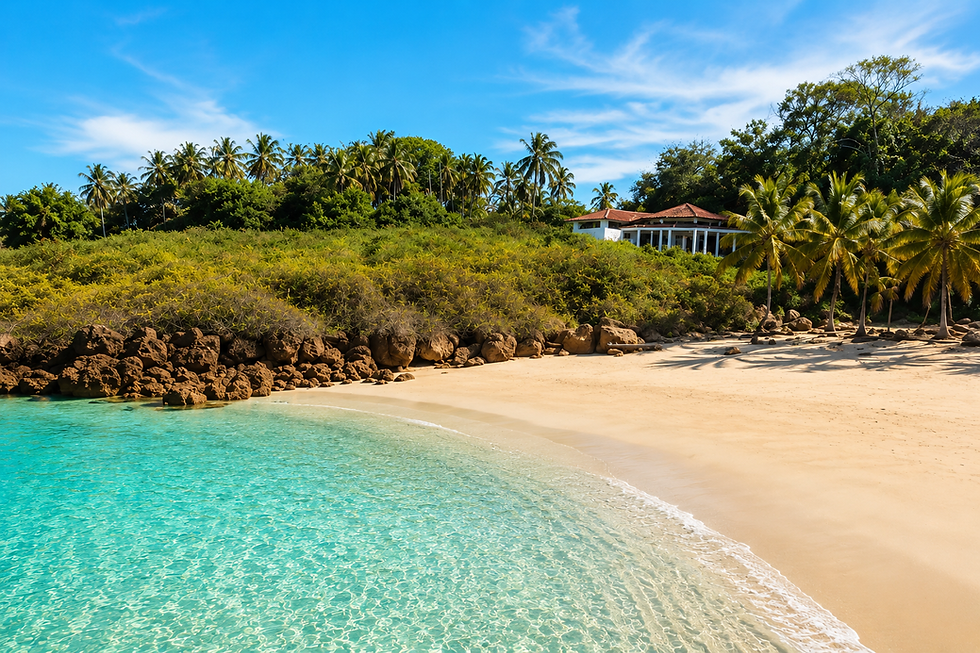
The infrastructure trade-off is honest and worth stating clearly: routine medical care is available in nearby Las Tablas (40 minutes), but anything serious means Panama City, about four hours away. Direct flights to multiple US cities depart from there. This is Pacific coast Panama before mass expat relocation arrived — and for retirees who want that and have planned honestly around the healthcare logistics, Pedasí delivers the pensionado benefits of Boquete with almost none of the crowd.
Best long-term residency route: Pensionado Visa ($1,000/month lifetime pension) → immediate permanent residency
Monthly cost of living: $1,500–$2,400
Residency fees: ~$500–$1,500 (attorney strongly recommended)
Time to residency approval: 3–6 months
Key perk: 20–50% Pensionado discounts on healthcare, flights, dining & utilities — valid nationwide
9) Bucaramanga, Colombia
Best fit for: Retirees and remote workers who want a genuine, mid-sized Colombian city with outstanding livability, strong healthcare, and almost no expat footprint.
Bucaramanga is known to Colombians as the "City of Parks" — more than 160 green spaces distributed through a city of around 600,000 people perched at 959 meters in the northeastern Andes. The climate averages in the upper 70s Fahrenheit year-round: consistently warm, mild, and comfortable without the heat of the coast or the cold of higher elevations. The city has two world-class hospitals — the FOSCAL Clinic, which treats international patients, and the Fundación Cardiovascular de Colombia, a Joint Commission International-accredited facility. That level of medical infrastructure at this price point is genuinely rare on this list.

International Living has noted Bucaramanga but explicitly called it "a bit off the beaten path for foreigners" with "not very many expats" — which is candid for a publication that usually amplifies rather than understates. It's meaningfully cheaper than Medellín and hasn't experienced the gentrification that has reshaped El Poblado. Colombia's digital nomad and retirement visas both apply here. The Chicamocha Canyon, one of Colombia's most spectacular natural sites, is within driving distance. Bucaramanga is a genuinely great Colombian city — and most Americans have never once heard its name.
Best long-term residency route: Digital Nomad Visa (V-type) or Retirement Visa (M-type) → R-visa after 5 years
Monthly cost of living: $1,000–$1,800
Income requirement: ~$1,400/month for retirement visa (3× Colombia's 2026 minimum wage)
Residency fees: ~$250–$400 per person
Time to residency approval: ~30 days
10) Nevis, St. Kitts & Nevis
Best fit for: Well-resourced individuals and lifestyle seekers who want a small, deeply peaceful English-speaking Caribbean island — quieter and far less developed than St. Kitts, with no mass tourism and a genuine community feel.
Nevis is the smaller, quieter sister island of St. Kitts — separated by a two-mile channel and reached by a 25-minute ferry from Basseterre. Where St. Kitts has grown into a moderately busy hub with a large airport and a growing resort scene, Nevis has resisted that trajectory almost entirely. The island's 12,000 residents live around a single dormant volcano, with the main settlement of Charlestown wrapping around a small harbor. No chain restaurants, no high-rises, no cruise ship terminals. St. Kitts & Nevis imposes no personal income, capital gains, wealth, or inheritance tax — a significant draw for retirees with investment income — and the Eastern Caribbean dollar is pegged to the US dollar.

The practical notes are important: the Alexandra Hospital handles basic care, but anything serious requires evacuation to Barbados or the US — plan accordingly. There's no dedicated retirement visa, but long-term residency permits are available through property ownership or demonstrated financial means, and citizenship is accessible via the federation's well-known CBI program ($250,000 minimum) or through naturalization. Nevis is best suited to people who are genuinely drawn to island smallness and community — not just Caribbean aesthetics. For those who are, it's an island that gets under your skin in a way few places do.
Best long-term residency route: Long-term Residence Permit (property ownership or financial means) or CBI citizenship ($250,000+)
Monthly cost of living: $2,000–$3,200 (imported goods are expensive on island)
Residency fees: Annual permit fees + attorney (~$500–$1,500); CBI from $250,000
Time to residency approval: 3–6 months for residence permit; 6–8 months for CBI
Key note: No income, capital gains, or inheritance tax; EC dollar pegged to USD; English-speaking
These are just some of the options out there. Our most important advice is don't base your choice on trends or visa policies — those change. The key thing is to find the place that's right for you. You need a plan, a timeline, a budget, and an expert in your corner. This is exactly why Wayfinder International exists.
Book a consultation today if you'd like to build a realistic, sustainable, and legally sound path to the life you want overseas.


Comments